



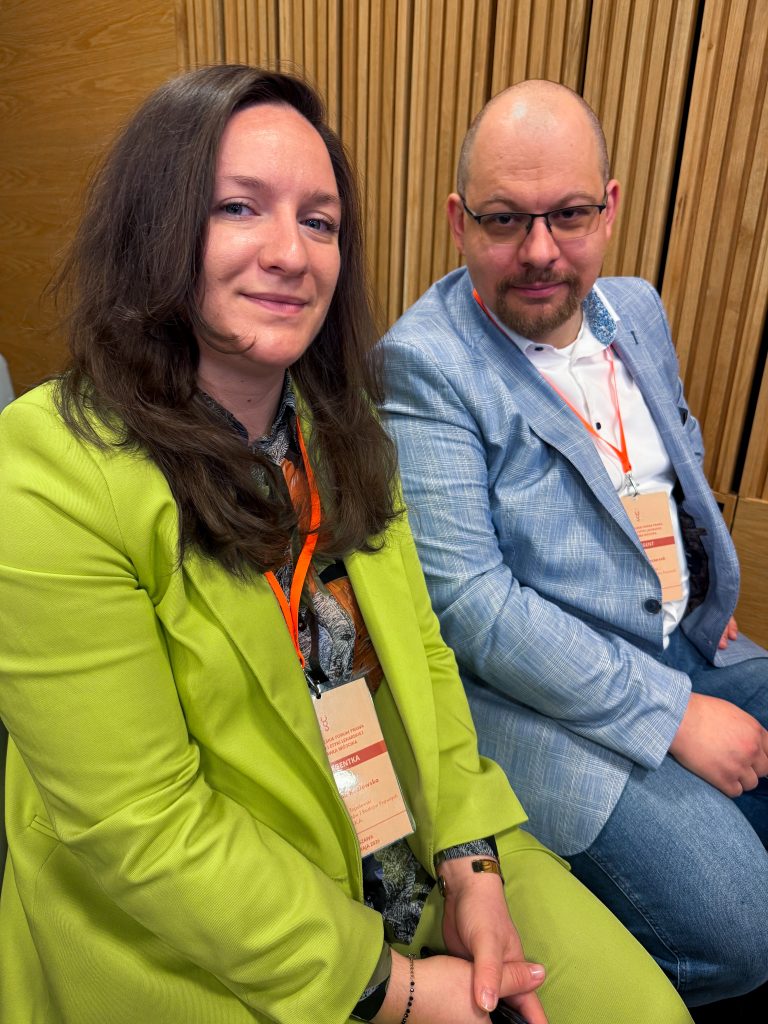
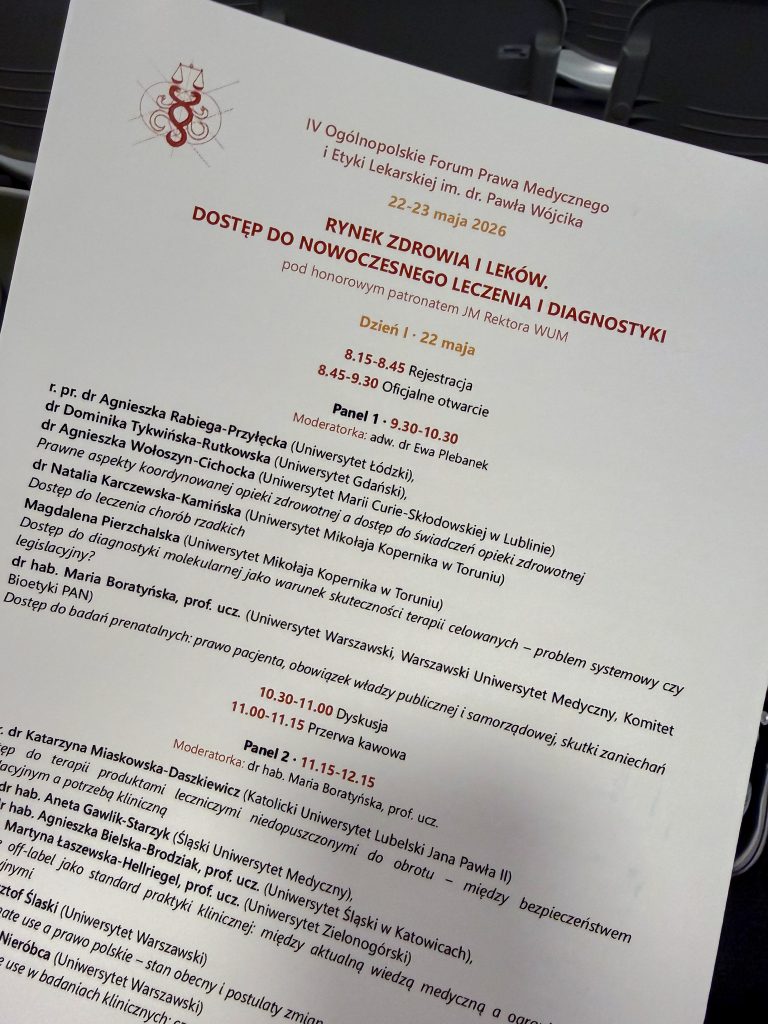
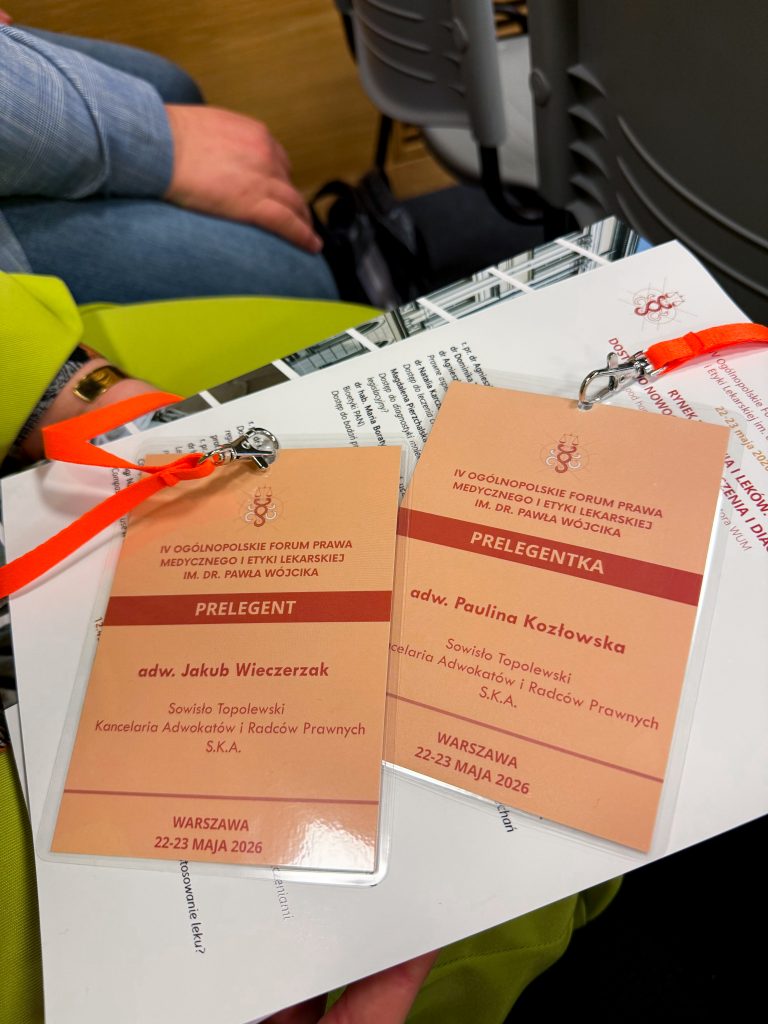
During the 4th Dr Paweł Wójcik National Forum on Medical Law and Medical Ethics, entitled “The Health and Medicines Market: Access to Modern Treatment and Diagnostics”, organised by the Medical University of Warsaw, the Interdisciplinary Laboratory of Medical and Pharmaceutical Criminal Law at the Faculty of Law and Administration, University of Warsaw, and the Bioethics Committee of the Polish Academy of Sciences, Attorney-at-law Paulina Kozłowska and Attorney-at-law Jakub Wieczerzak delivered a presentation on the limits of legality in aesthetic medicine (aesthetic and reconstructive medicine).
The analysis focused on current issues regarding the classification of aesthetic medicine procedures as healthcare services, the legal status of procedures interfering with tissue integrity, and the consequences of using medicinal products and medical devices outside the healthcare system.
The presentations discussed, amongst other things, the significance of the Supreme Court’s case concerning aesthetic medicine procedures, the position of the medical self-government, the regulatory implications of the Minister of Health’s regulation on the professional competences of doctors and dentists, and the practical significance of the Ministry of Health’s statement of 23rd January 2026. The presentations also focused on issues of liability associated with the performance of aesthetic procedures, as well as patient safety and the boundaries of competence of the various professional groups involved in the aesthetic services market.
The speakers presented a critical analysis of the current regulatory model, highlighting the need to create coherent and proportionate legal solutions that take into consideration both patient safety and the realities of the aesthetic medicine and beauty markets.
Particular attention was paid to the need for a clear distinction between non-medical treatments and high-risk procedures requiring medical qualifications, the competence to treat complications, and the fulfilment of patients’ rights.
We are delighted to have been able to participate in a debate on one of the most modern and multifaceted issues at the intersection of law, medicine and the aesthetic services market.
Receive expert analyses, commentary on new regulations, and guidance to help you make business decisions.

By clicking "Accept cookies", you consent to the storage of cookies on your device in order to improve site navigation, analyze the use of the site and help with our marketing activities.